
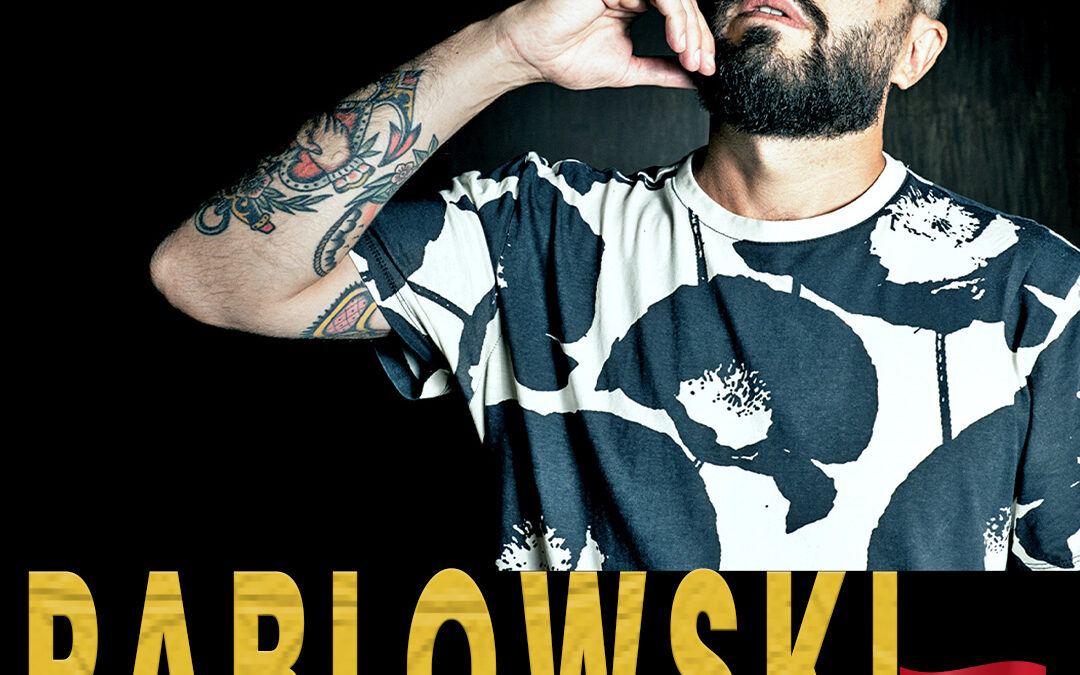
There are poets who speak, and then there are artists who compose. The European champion from Spain, Pablowski, belongs firmly to the latter. His journey is a rare and compelling story of a visual artist who found his voice not in the silent grammar of paint and canvas, but in the thunderous, vulnerable space of the poetry slam stage. He doesn’t just perform; he builds. Every breath, every pause, every shift in tone is a deliberate brushstroke in a larger work, creating a poetic experience that is not just heard, but profoundly felt and seen.
His first language was the language of images. Before the applause, there was the quiet solitude of the studio the smell of turpentine, the careful scrape of an engraving tool on a copper plate. Pablowski’s formal education was in Fine Arts, and that rigorous training never truly left him. It’s what gives his poetry its unique texture. On stage, his words move with a chiaroscuro quality, playing with light and shadow in a way that reveals a deep truth where you least expect it, and a stinging, painful reality in the quiet darkness. He learned that negative space the silence between words can hold just as much power and meaning as the words themselves.
His rise wasn’t a sudden burst of genius, but the patient, consistent work of an artist mastering his craft. He honed his skills on the demanding local stages of Catalonia, a vibrant and competitive circuit that forces a poet to be clear, compelling, and emotionally honest. He collected victories in places like L’Hospitalet and Barcelona, stacking seasons that proved his artistry was no fluke. This dedication paid off in a remarkable run in late 2022. First, he secured the Spanish National Championship, earning the right to represent his country. Then, just two months later in Rome, he stood on the world stage and was crowned the European Poetry Slam Champion. His winning performance of “Recuérdame (Remember Me)” wasn’t just a poem; it was a deeply personal and unforgettable composition that left the room drafted rather than simply addressed.
Yet, what makes Pablowski a true figurehead for the slam movement isn’t only the medals and titles. Beyond the spotlight, he remains a dedicated teacher and a vital member of his community. By day, he teaches artistic drawing at the high school level, passing on the same foundational skills that shaped his own creative life. After hours, he channels his energy into mentoring emerging writers and leading creative workshops in partnership with community and mental health spaces. Here, poetry is not a competition to be won, but a conversation to be had a tool for healing and connection. His own bio calls it plainly: “art teacher, mental-health worker, poet, slammer.” This isn’t a list of separate jobs; it’s the honest, porous-to-the-world ethos that keeps his work genuine and impactful.
Having represented Spain at the World Poetry Slam Organization’s global championship, his vocabulary one built on image, empathy, and impact has proven its power to translate across borders. In a scene that can feel rushed, Pablowski moves with the thoughtful patience of a painter, adding his layers one by one, a poetic stroke at a time, until the poem is not merely heard, but truly seen. He is a living testament to the idea that art, in all its forms, is a conversation that never ends.